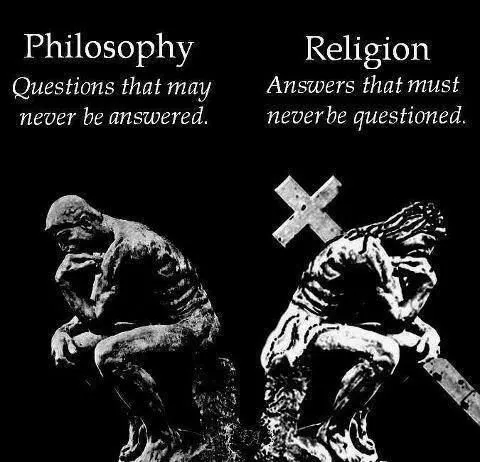
Dogma now occupies a wrong constellation that represents a situation where someone believes in something without first applying that belief.
A dogmatic person must believe in something that is no longer relevant, he doesn’t want his belief, or he doesn’t want to question his belief which opens the gap for a new, more relevant belief.
But dogma is not always presented like that.
What is that dogma?
“Dogma in the broad sense is any belief held with unquestionable certainty”
- Wikipedia.
Wikipedia also says:
“The word dogma was translated in the 17th century from Latin dogma meaning “philosophical tenet” or principle, derived from the Greek dogma (δόγμα) meaning literally “that which one thinks is true” and the verb dokein, “to seem good”.
-Wikipedia
We can simplify that dogma is a principle that is believed to be true without testing its truth.
Dogmas staunch holders will stay away from anything that attacks their dogma, be it questions that criticize beliefs or denials of facts contrary to dogma.
Society develops dogma in religious, political, economic, and social systems that teach a single view of life and how to look at the world.
If someone holds the dogma of communism, then that person will undoubtedly believe that communism is the best economic system and even the best way of life. Never ask questions critical of communism such as “What if communism is wrong?”, “What if free-market capitalism turns out to be the best economic system?” And if he sees the economic collapse caused by communism, he will blame those who are incompetent to run the economic system of communism properly. This is a pretext for denying the depravity of communism. No matter how bad things happen because of communism, he will assume communism is the best way of life while the damage occurs because of the mistakes of the people who operate communism.
A new perspective on dogma
If you disagree with what I wrote, on what basis do you believe that defending dogma is wrong? To blame something, you must first stand on what you believe to be the truth.
We consider what we believe to be true because:
First reason. Because it’s been tested, a statement is true if proven to be true mathematically or empirically. But you can never test ethical things like whether murder is mathematically wrong? Can we empirically know that human rights exist, and should we respect them? We can divide humans but will not find human rights there.
The second reason. Because people believe it’s true. If you think something is true, it must be because everyone believes it is, and they won’t go wrong en masse. In ancient times, the fact is that people were massively wrong with their dogmas, such as sacrifices, wars, and strange rituals.
The third reason is moral and ethical reasons. If a person is morally wrong to act based on dogma, that dogma must be wrong. Morals and ethics start with belief. We can believe one thing is ethical and moral for our group while another is not. For the people of the Amazon interior, infanticide before the naming ceremony is not murder because the baby has not been given a spirit. On what grounds do we consider them to be moral and ethical?
You disagree with me, and you need a dogma that you believe is the truth. Further, blame me for my heretical dogma, which is incompatible with your dogma.
Dogma is the principle of living by which we determine who we are, why we exist, what we should do with our lives, where we will go.
We don’t know whether our dogma is right or wrong because it is impossible to prove dogma.
Morals and ethics are built on dogma. Dogma will not stand alone. It is a belief that is firmly believed as if it were as accurate as rocks and trees.
What’s next?
“Epicureanism is a dogmatic philosophy teaching that truth is knowable and that there are knowable, measurable, observable truths. Its philosophical dogmatism is grounded on the Epicurean view of empiricism and based on the evidence of the senses.
Stoicism has many dogmas, such as the well-known Stoic dogma “the only good is moral good, and the only evil is moral evil”
-Wikipedia.
Many people spend their time studying various dogmas rather than practicing them. Therefore, searching the“single truth search” in these dogmas is utterly useless.
Each dogma has its weaknesses, and it is impossible for there to be a single dogma that stands fully in answer to all the world’s problems and is perfectly free from defects.
Therefore we must study a dogma, live it wholeheartedly and avoid questioning its fundamental beliefs. We will live this dogma, and with this dogma, we can live.